
The Body
Book Introduction
The Body is a coming-of-age novella by American author Stephen King, first published in 1982 as part of the collection Different Seasons. The story is set in the fictional town of Castle Rock, Maine, during the summer of 1960. It follows twelve-year-old Gordie LaChance and his three friends—Chris Chambers, Teddy Duchamp, and Vern Tessio—as they embark on a journey along railway tracks to find the body of a missing boy, Ray Brower, who was killed by a train. The boys come from troubled or dysfunctional families: Gordie is neglected by his parents after the death of his older brother; Chris is from a violent household but dreams of a better future; Teddy is partially deaf and considered odd due to his father's mental issues; Vern is overweight and timid. Their quest is motivated by a desire to gain fame by reporting the body, but along the way they confront dangers—including a near-miss with a train and a confrontation with older bullies—and ultimately grapple with the harsh realities of mortality and growing up. The novella is widely regarded as semi-autobiographical, reflecting King's own childhood experiences of poverty, family abandonment, and the solace he found in writing.
Themes and Style
The central themes of The Body are the loss of innocence, friendship, and the confrontation with death. King uses the physical journey to symbolize the transition from childhood to adulthood, as the boys are forced to acknowledge the fragility of life and the inevitability of change. The story is told in a first-person retrospective narrative, allowing for a nostalgic yet unflinching look at the past. King's prose is emotionally resonant, blending vivid descriptions of the Maine landscape with sharp characterizations and dialogue. The novella also includes a short story within the story, 'Stud City,' written by Gordie, which explores similar themes of loss and grief. Critics have praised the work for its depth and sincerity, noting that it showcases King's versatility beyond the horror genre.
Background and Legacy
The Body was published during a period when King was already a bestselling author of horror novels like Carrie and The Shining. The collection Different Seasons marked a departure, demonstrating his ability to write compelling literary fiction. The novella was adapted into the 1986 film Stand by Me, directed by Rob Reiner, which became a beloved classic and earned an Academy Award nomination for Best Adapted Screenplay. The story has been published as a standalone edition multiple times and translated into 31 languages. Its enduring popularity lies in its universal themes: the bittersweet nature of friendship, the pain of growing up, and the power of storytelling to make sense of loss. The Body remains a touchstone in King's oeuvre and a poignant exploration of the moment when childhood ends and the real world begins.
The novella's most prominent adaptation is the 1986 film Stand by Me, directed by Rob Reiner. The screenplay, penned by Bruce A. Evans and Raynold Gideon, earned nominations for both the Academy Award for Best Adapted Screenplay and the Writers Guild of America Award in the same category, cementing the story's cultural impact beyond its original publication.
About the Author
Author Biography
Stephen Edwin King was born on September 21, 1947, in Portland, Maine, the second son of Donald and Nellie Ruth Pillsbury King. When he was two years old, his father left the family, never to return, and King was raised by his mother along with his older brother David. The family moved frequently, living in Indiana, Connecticut, and other states before settling in Durham, Maine, when King was eleven. His mother worked in the kitchen of a residential facility for the mentally challenged to support them. King's early life was marked by poverty and instability, which later fueled his storytelling.
King developed a love for reading at an early age, and after a childhood illness kept him home from school, he began writing his own stories. He sold his first story, 'Mr. Rabbit and His Friends,' to his mother for a dollar. He attended the University of Maine, where he earned a BA in English in 1970. There he met Tabitha Spruce, whom he married in 1971. After graduation, King struggled to find a teaching job and worked menial jobs—including at a laundry and as a gas station attendant—while writing short stories for magazines. The family lived in a trailer, and King wrote on a makeshift desk set up on a washing machine.
King's breakthrough came with the novel Carrie (1974), about a bullied high school girl with telekinetic powers. The book earned him a $400,000 advance, allowing him to write full-time. He followed with a string of bestsellers: The Shining (1977), The Stand (1978), The Dead Zone (1979), and Firestarter (1980). In 1982, he published the collection Different Seasons, which included the novellas Rita Hayworth and Shawshank Redemption and The Body, both later adapted into acclaimed films. King has written over 60 novels and 200 short stories, with sales exceeding 350 million copies worldwide. His works have been translated into 33 languages and adapted into numerous films, TV series, and comic books. Despite his genre label, King has earned critical respect, winning the National Book Award's Medal for Distinguished Contribution to American Letters (2003), the World Fantasy Award, and multiple Bram Stoker Awards. He is often called the 'King of Horror,' but his writing spans drama, fantasy, and realism. King has been married to Tabitha for over 50 years; they have three children, including writers Joe Hill and Owen King. He has spoken openly about his past struggles with addiction, which he overcame in the 1980s. Now in his late 70s, King continues to publish new works and remains one of the most influential authors in popular culture.
StoryFlow
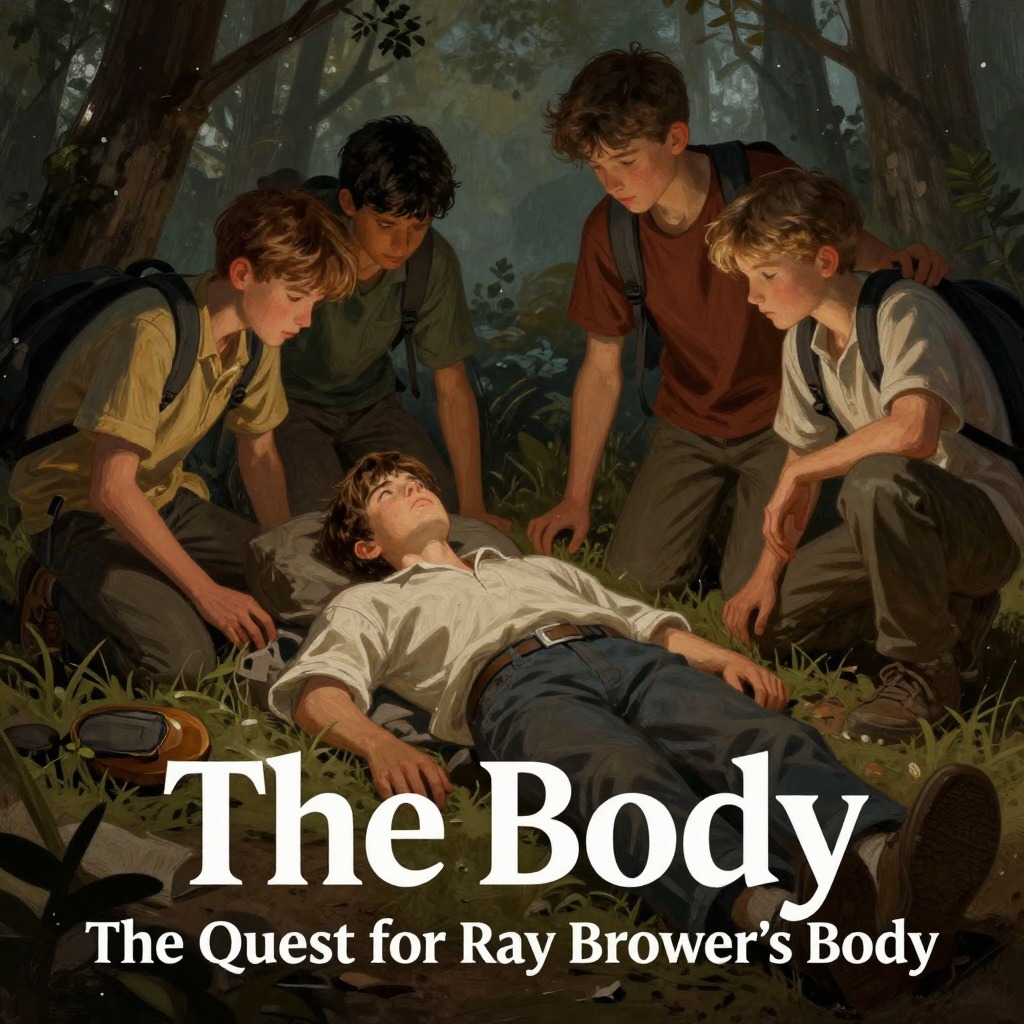
The Quest for Ray Brower's Body
The central journey of four boys who set out to find the corpse of a missing boy, tracing their adventure from planning to discovery and its aftermath.
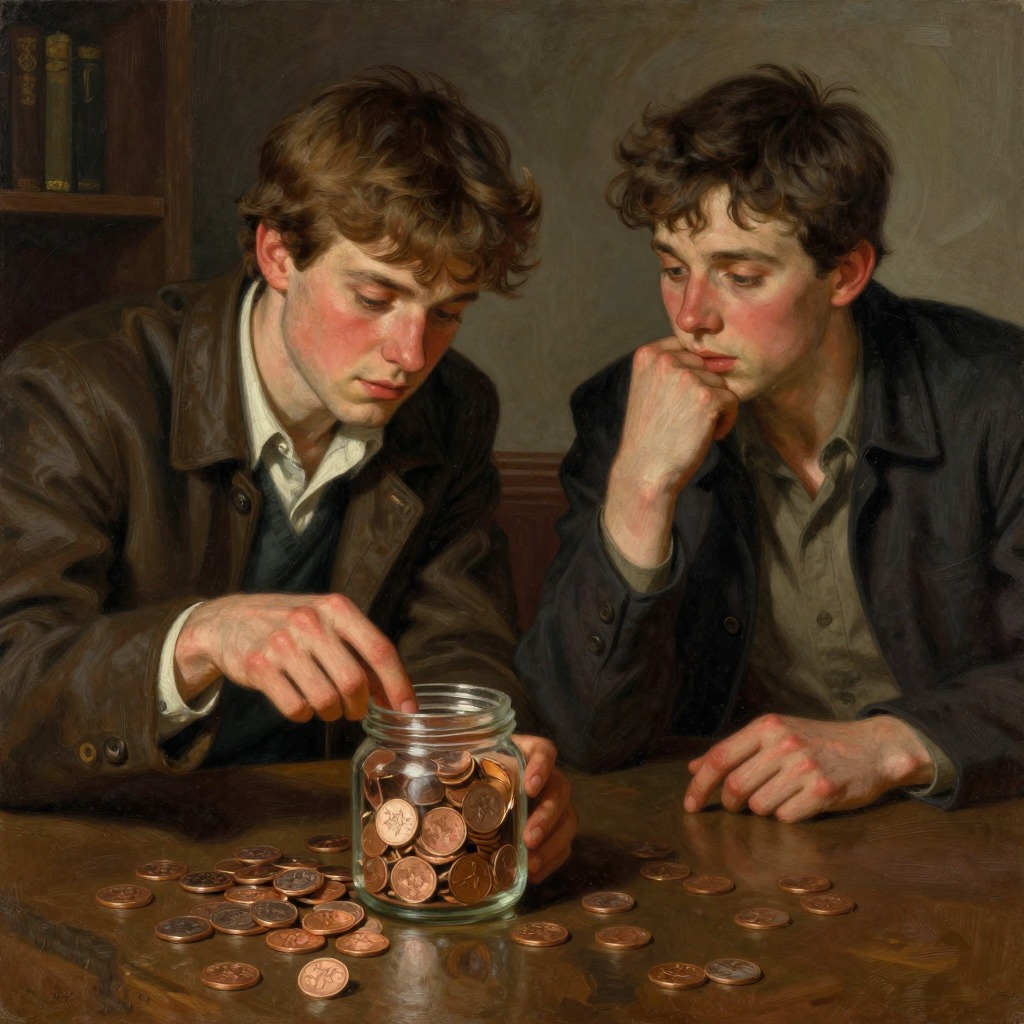
Vern's Penny Jar and the Overheard Secret
Vern's obsessive search for his buried pennies leads him to overhear his brother's secret about Ray Brower's body, setting the entire story in motion.
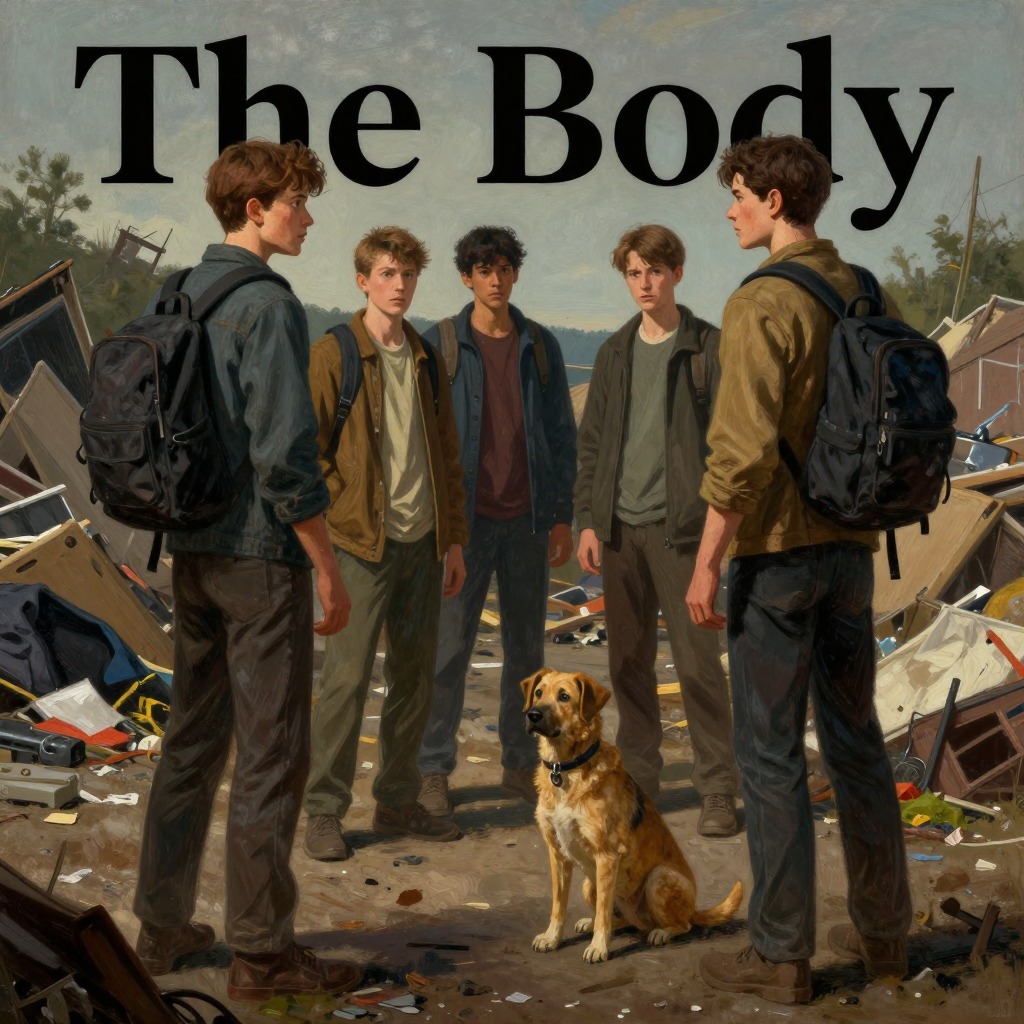
Confrontation at the Dump
The boys' encounter with Milo Pressman and his dog Chopper at the Castle Rock Dump, highlighting the gap between myth and reality.
